After more than two decades of success with their California Pizza Kitchen (CPK) restaurants, founders and co-ceos Rick Rosenfield and Larry Flax wanted to launch a new restaurant chain that was a little more upscale and a lot hipper. Five years ago they opened the first LA Food Show in Manhattan Beach, Calif., and diners applauded the restaurant’s interesting menu at online review sites. But when the founders set about creating a second one – in Beverly Hills, no less – they wanted to kick things up a notch.
“The older one didn’t have the energy and movement they wanted; it was static and uniform,” says Walter Pancewicz, principal and vp with Aria Group Architects, which designed the second restaurant.
The Beverly Hills locale chosen for the second LA Food Show — an early 20th century industrial building with beautiful bowstring trusses, wood beams and brick walls — put its own stamp on the designers’ plans. “The unique character of this building made us want to preserve a certain amount of it,” says Rosenfield.
As a result, the project team cleaned up many of these elements and left them exposed. Some new materials (such as wood and terrazzo) were brought in specifically to complement the older ones.
Because the restaurant wasn’t branded as a CPK, the designers had free rein, aside from using a richer version of that chain’s signature red color, throughout much of the new design. The 5800-square-foot space is long and narrow, “and the positioning of the kitchen was very important,” says Pancewicz. “If it had been installed in the back it would have made the front of the house look too small.” The solution was to run the kitchen along a side wall with the bar on the other. That improved the depth of vision from the front, making the space appear larger than it is.
Initially, the owners didn’t want a mezzanine, but one was necessary in order to get to their targeted seating count of around 200. The design team turned that mandate from constraint to inspiration and used the staircase as a major focal point. Keeping the upscale goal in mind, they went for the exotic. The risers are backlit, the treads are terrazzo and Bolivian rosewood flooring strips were used on the curved walls.
“The space sort of spoke to us in terms of how everything would be laid out,” Pancewicz explains, “and the stairs just landed in the center. It’s a direct view from the door, and we wanted customers to know right away that there was another space upstairs.”
Directional lighting brings out the deep, warm hues of the wood along the stairwell, creating a rich glow. Working with consultant Schuler Shook of Chicago, designers also used lighting to define different zones. A mix of pendant fixtures works with zigzagged bulkheads and suspended platforms “to give scale to the space without destroying the volume and the height,” Pancewicz says.
The end result is a space “that’s really dynamic,” says Pancewicz, “not just in terms of people but in the movement within the finishes and the architectural space. Curves, floating elements and some saw-toothed mezzanine wall surfaces – there are a lot of things going on. They wanted the restaurant to be a show, and I think it’s very at home in L.A.”
SIDEBAR: CONSTRUCTION CHALLENGES SURMOUNTED
To help turn their design aspirations into a concrete reality for the latest LA Food Show, California Pizza Kitchen’s owners turned to a contractor they knew well: Shawmut Design and Construction, which has built several CPKs and whose roster of restaurant clients range from Nobu to Dave and Buster’s.
That expertise paid off in the Beverly Hills project. “With a new prototype, which is essentially what this was, collaboration is especially important,” Marc Marcelli, project executive with Shawmut. “Things always, when drawn, appear to be much easier to build than they turn out to be. So we work hard to understand the intent of the design.”
On top of that, the space housing the LA Food Show was home to several “existing conditions that made this project especially difficult,” Marcelli notes. Trusses needed repair; water-damaged wood needed to be replaced; foundation footings were required under the basement walls and the street-level floor had to be dropped seven inches to accommodate the ceiling height required by code under the mezzanine. In addition, with offices, storage and prep areas relegated to the basement to maximize the restaurant’s capacity, the contractor had to install exterior stairs on the back of the building for egress, with all the required shoring, underpinning and structural concrete.
The project ran slightly over budget and late, taking about nine months for design and drawing (including a laborious approval process with the city) and another year for construction. To work through the overruns and delays, the project team relied on weekly conference calls, monthly on-site visits from Aria Group (based in Oak Park, Ill.) and frequent mockups of materials from the contractor to make sure it all would be worthwhile.
Project Participants:
Client
California Pizza Kitchen, Los Angeles: Rick Rosenfield and Larry Flax, co-founders and co-ceo
Design/Architect
Aria Group Architects Inc., Oak Park, Ill.:Walter Pancewicz, principal; Dave Nash, associate; Renea Reichenbach, senior designer; Ronnie Lester, project coordinator; Laura Lencioni, marketing coordinator
General Contractor
Shawmut Design & Construction, Boston
Outside Design Consultant
Schuler Shook, Chicago (lighting)
Artwork
Christopher H. Martin, Christopher Martin Gallery, Dallas
Audio/Visual
Tab Technical Services, Newbury Park, Calif.
Carved MDF Wall Panels
Interlam, Claudville, Va.
Custom Light Fixtures
Murray’s Iron Works, Los Angeles
Decorative resin
Kinon, Hillside, N.J.
Honeycomb panels
Panelite LLC, New York
Loose Furniture
Lowenstein, Chicago
Millwork
Architectural Woodwork of Montanta, Columbus Falls, Mont.
Signage/Graphics
Chandler Signs, Dallas
Tables and Booths
Amtrend Corp., Fullerton, Calif.
Terrazo Flooring
Corradini Corp., Fountain Valley, Calif.


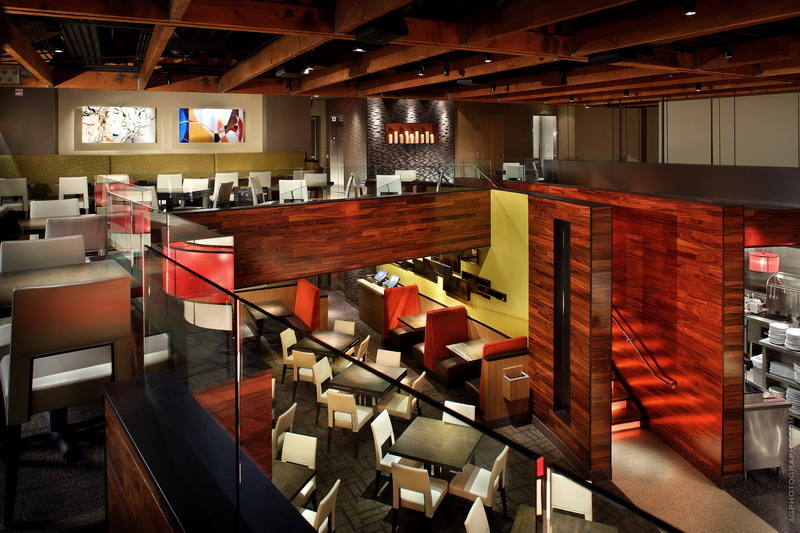
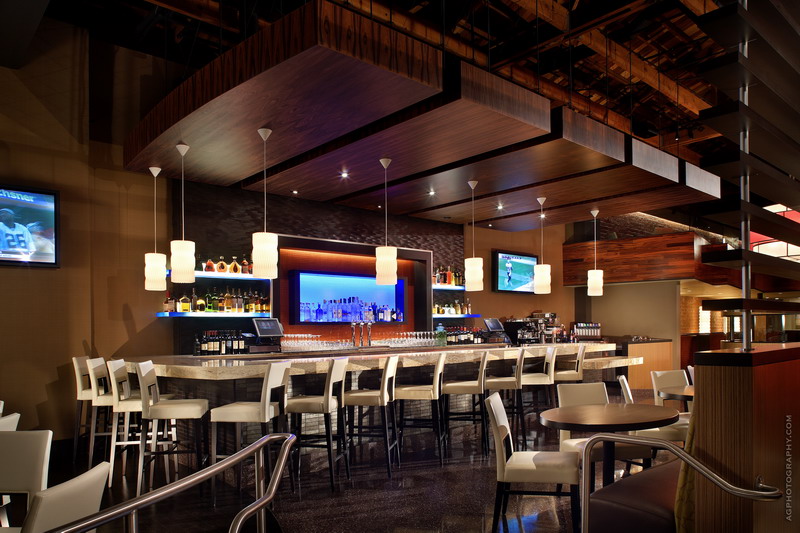

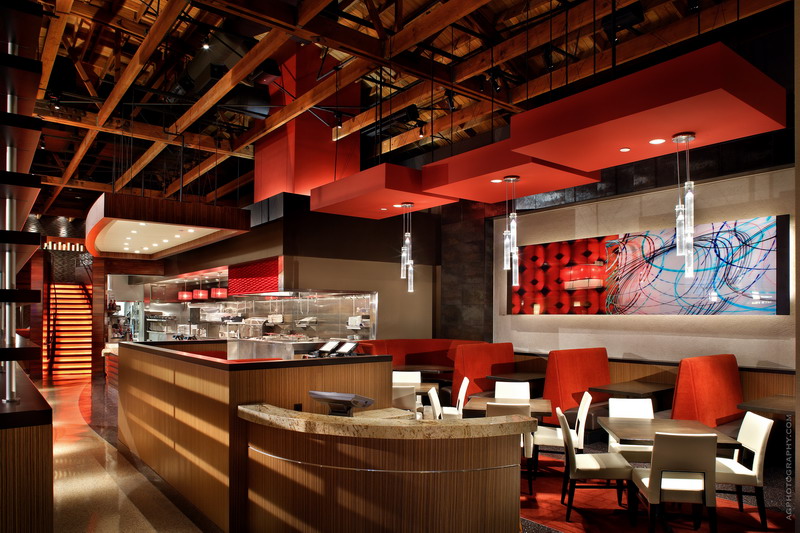

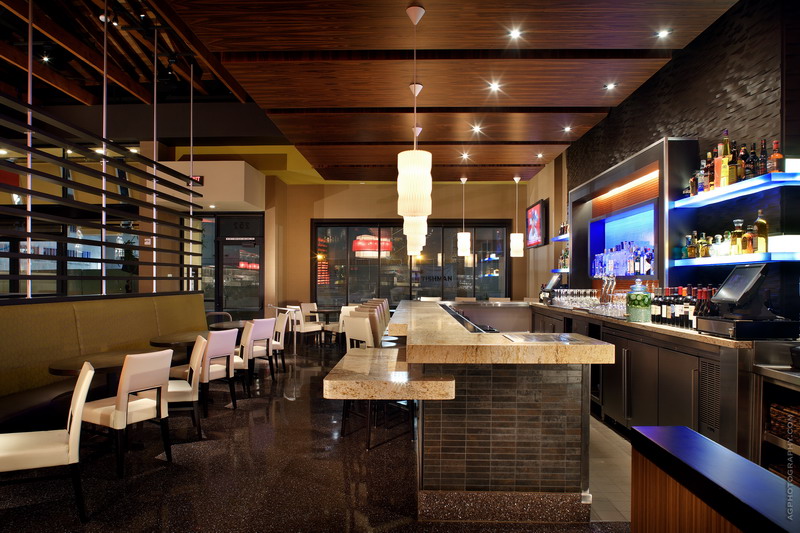











 Photo Gallery1 week ago
 Headlines3 days ago
 Headlines1 week ago
 Headlines1 week ago
 Designer Dozen2 weeks ago
 Headlines1 week ago
 Designer Dozen6 days ago
 Headlines1 week ago