Digital signage is hardly a new idea in retail design. In fact, many of us have had the experience of walking through a store and, upon seeing a particularly clunky kiosk or blocky plasma TV bolted onto a fixture, thought to ourselves, “2003 called and wants its digital signage back.”
The biggest problem isn’t digital signage as a concept. It’s the tools designers think of as digital signs. The core underlying technologies that power visual displays have shifted radically in the past decade, yet somehow our vision for applying those technologies to retail design remain stuck in the past.
But a new concept has arrived that opens a number of doors for today’s store designers if applied in innovate ways: digital projection. Recent advances in this technology have pushed the capabilities of digital projectors in two paradoxical directions, as the big have gotten bigger and the small have gotten smaller.
Big & bold
First, let’s look at the big. Today’s larger-format projectors are capable of ultra-high resolution projection with enough light to show clearly in all but the brightest sunlight. When combined with the sophisticated 3-D rendering capabilities of today’s computers, designers now have at their disposal “digital paint” that can be overlaid on both interior and exterior surfaces.
What makes this such an intriguing concept for designers is that unlike previous projection that showed on a screen (either a 4:3 or 16:9 widescreen), digital paint appears directly onto the environmental surface. It’s not constrained to a rectangle-box shape. This means that unique geometries, like curves and corners, can be digitally painted, blurring what’s digital and what’s physical into a seamless design.
One recent high-profile example of digital paint was introduced into Walt Disney World’s iconic fireworks display over Cinderella’s castle. A Disney-based story is projected onto the front of the castle from a group of high-definition projectors. The scenes blend into the physical environment with characters climbing up towers and around windows and “fireworks” shooting across the front of the castle in concert with the real fireworks up in the sky.
Other designers have used digital paint on interiors to replace wallpaper and signage. Add enough projectors and you can even create a “Star Trek” holodeck-like experience where every surface around the viewer is digitally enhanced and immersive.
Small & streamlined
But just as projectors have gotten powerful enough to catapult the shopper into a 24th Century, virtually enhanced environment, they’ve also shrunk down to tiny proportions. This enables designers to integrate digital projection into previously impractical places, like individual shelves, displays and wall niches.
This evolution in projectors has led to a slimming down in all areas, including resolution, brightness, power consumption and, most importantly, price. Called “pico projectors,” these tiny marvels are about the size of a cell phone and range in price from $100 to $400. They generally use LEDs or lasers in lieu of the traditional LCD technology to create colors, which results in a dramatically dimmer image.
But they can be used to bring the concept of the digital fixture to life, allowing individual shelves, gondolas and surfaces to display digital content from a tiny device to a roughly 15-square-foot area.
Pico projectors can also be integrated into any type of fixture design and, similar to digital paint, are not limited to rectangular shapes. The low light output of pico projectors means that light escaping the edges of irregular shapes isn’t noticeable. Some units even have an infinite focal plane that can wrap around any shape, so instead of a “flat screen,” retail fixtures like mannequins, columns and 3-D shapes can become canvases for video content.
The potential applications for the creative designer abound, especially when combined with business analytics and decision-making behind the digital fixture solution. Retailers are no longer limited to static promotional signage in the store, as database-driven analytics allow clusters of shoppers to be targeted based on individual conditions. Imagine if shelves could display messaging based on whether the product was in stock or tie-in with product promotions.
New capabilities for designers
While designers have a long history of using texture, color, material and lighting in designing store environments, digital paint and fixtures change the game. As part of a creative palette, they offer unlimited ability to shape the visual experience, centered on three major shifts to the designer’s toolkit.
1. From static to dynamic: Changes to content can be instant and made with effectively zero cost. You don’t need to wait weeks for store associates to put up new signage when the content can change moment to moment.
2. From still to moving: Digital paint and digital fixtures are not limited to still images. In fact, some of the most compelling examples merge full-motion video elements seamlessly into the physical background.
3. From passive to interactive: Since digital paint and digital fixtures rely on some form of computing power in the background, they can be great displays on top of an interactive experience. While we’ll explore next-generation kiosks and interfaces in an upcoming column, in-store digital projection can be changed with anything from an iPad to a hand gesture.
For years, designers have faced a choice: either digital and square, or physical with texture and color. Digital paint brings these two capabilities together for the first time, shattering the tyranny of the “or” and allowing surfaces to come to life through the seamless integration of the digital and physical worlds.
Jim Crawford (about.me/jimcrawford) is executive director of the Global Retail Executive Council (grec), an international association, and a principal at Taberna Retail, a global retail shopping experience consulting company.


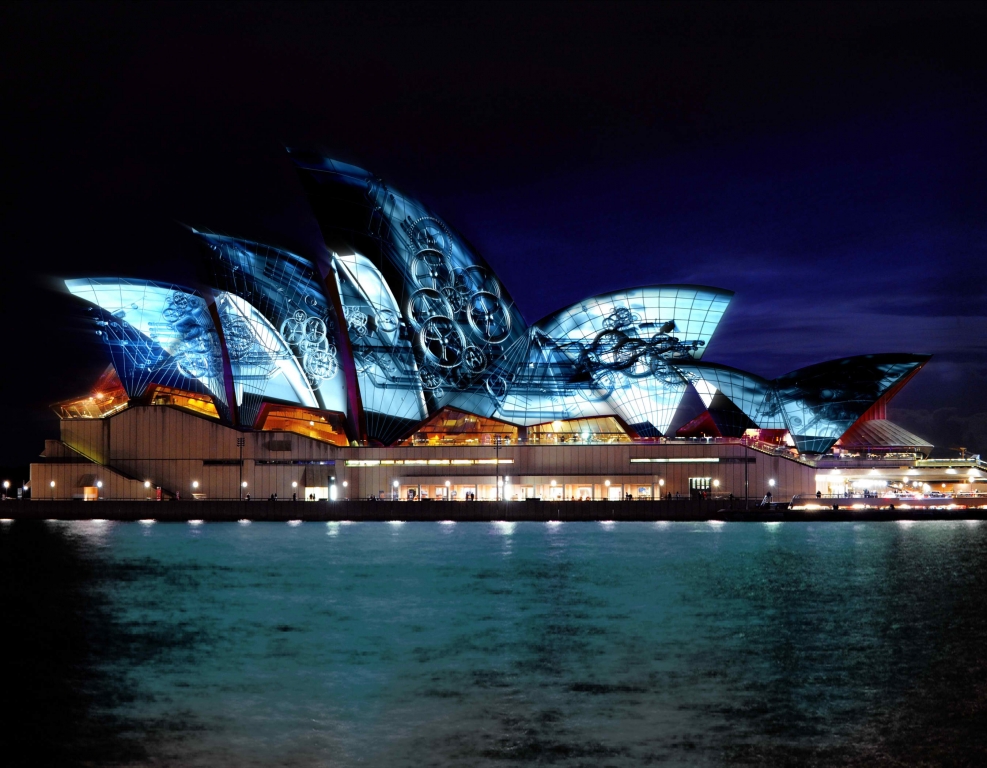









 Photo Gallery1 week ago
 Headlines4 days ago
 Headlines1 week ago
 Headlines2 weeks ago
 Headlines1 week ago
 Designer Dozen1 week ago
 Headlines1 week ago
 Headlines1 week ago