
Blogs & Perspectives
The Humanity Premium: Why the Most Valuable Retail Experiences Feel Human
In part one of this series, we’ll uncover that in a world optimized for speed and automation the concept of human presence, care and intentional friction have become premium differentiators rather than inefficiencies.

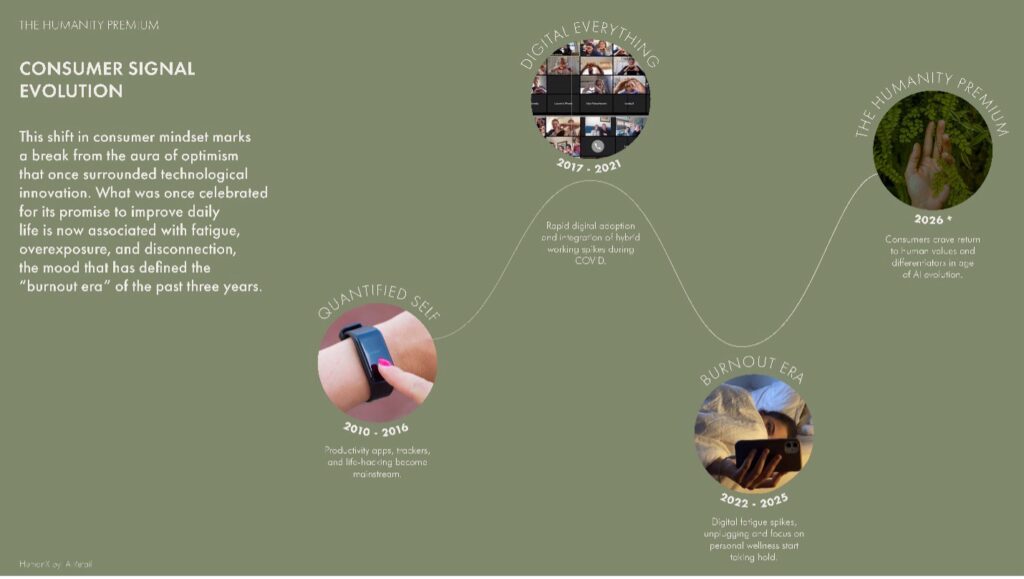
For years, retail innovation centered on efficiency. Faster checkouts, frictionless journeys and technology designed to remove human interaction was framed as progress. Yet today, as convenience has become universal, a counter shift is clearly underway: the more automated retail becomes, the more consumers value experiences that feel intentionally human.
This shift known as the humanity premium. The industry is seeing a growing value placed on retail environments that prioritize emotional connection, sensory richness and authentic interaction over speed alone. In an era defined by convenience, humanity itself has become the differentiator.
When Convenience Stops Being Compelling
Convenience is no longer aspirational, rather it is assumed in our daily life. Digital platforms allow consumers to transact instantly, often without speaking to another person. As a result, physical retail is no longer competing with e-commerce on efficiency. Instead, it is evaluated on what digital experiences cannot provide: presence, trust and emotional resonance.
AdvertisementResearch shows that in-person shopping trips are becoming more intentional. Consumers visit stores less frequently, but with greater purpose. These trips are driven not by necessity, but by a deep desire to explore, to connect, and to spend time in environments that feel grounded and considered. Increasingly, shoppers expect physical spaces to offer calm and clarity rather than stimulation or speed.
This is where the Humanity Premium emerges. When convenience becomes ubiquitous, its perceived value diminishes. What replaces it is emotional return: how a space makes people feel, not how quickly it moves them through.
Advertisement
Defining the Humanity Premium
Adrift and anxious, people are turning to rituals to restore structure and meaning to their lives , and 72 percent now weave brands into those rituals (TrendWatching, 2024). At its core, the Humanity Premium signals a rebalancing of priorities. Shoppers are gravitating toward environments that feel intentional rather than merely optimized, and toward spaces that communicate care through thoughtful, human-centered design decisions.
The following three experience signals consistently define human-centered retail environments:
Advertisement- Sensory depth, where lighting, materiality, acoustics and scale are designed to be felt as much as seen
- Tactile interfaces, encouraging physical interaction rather than screen-first engagement
- Immersive experiences – invite discovery, lingering and emotional engagement instead of rapid transaction
Together, these signals shift the role of the store. Rather than functioning as a high-performance retail machine, the space becomes a place of presence, where shoppers feel comfortable spending time, not just money.
The Store as Sanctuary
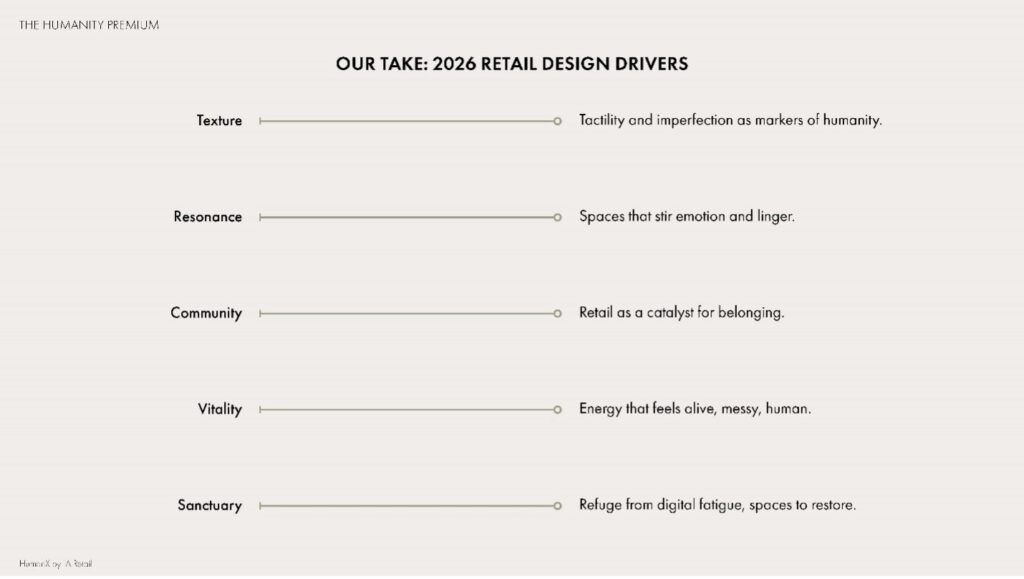
A key insight is the growing demand for retail spaces that function as sanctuaries. In a culture shaped by constant connectivity and digital overload, physical environments are increasingly valued for what they remove: noise, pressure and distraction.
Design strategies rooted in restraint are central to this shift. Visual noise is reduced. Product density is limited to allow breathing room. Seating is integrated as an invitation to pause. Circulation paths encourage exploration at an unhurried pace. These choices signal care and intention, reinforcing a sense of trust between brand and customer.
Humanity in Practice
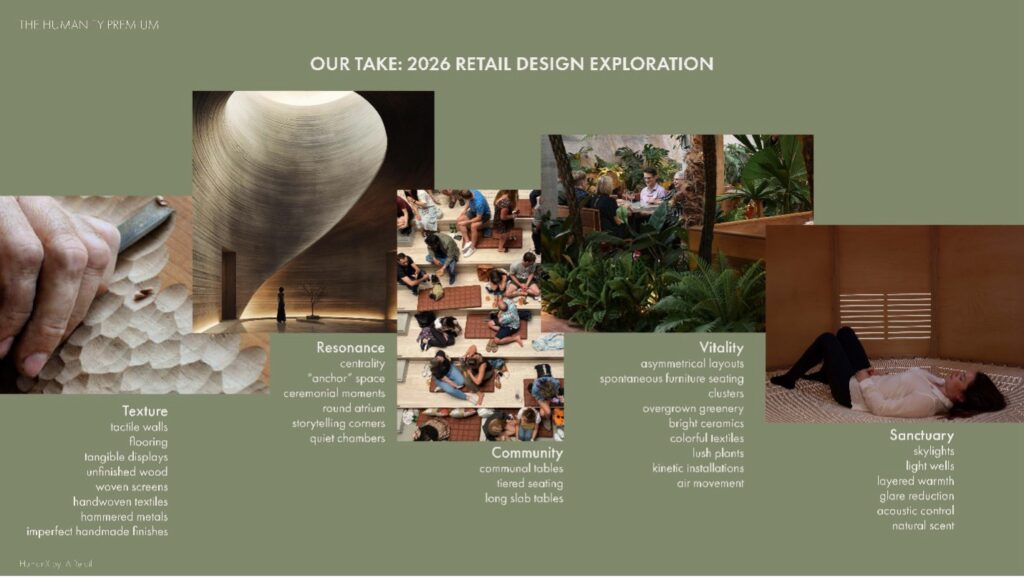
The Tecovas SoHo flagship is an example of the Humanity Premium in action. Tactile materials, cultural storytelling, and intentional social moments reinforce authenticity and connection. Technology supports the experience without dominating it, allowing staff to engage as hosts rather than transaction facilitators. Human-centered environments do not compete for attention, they create conditions for comfort. The result is a space that feels composed, grounded and emotionally supportive, qualities that consumers increasingly associate with premium experiences.
A Strategic Advantage
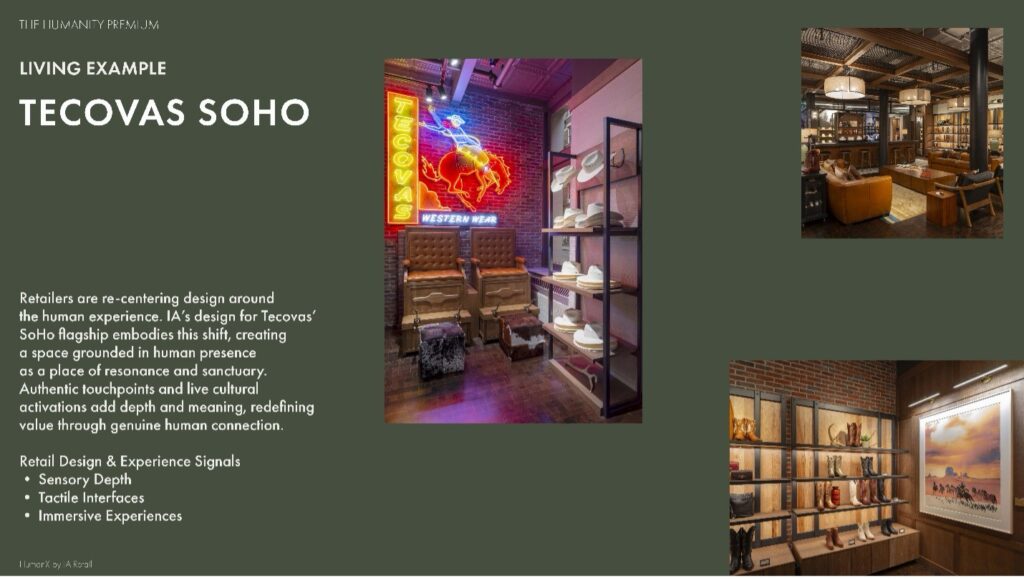
The Humanity Premium is not an aesthetic trend, it is an operational mindset. Brands that embrace it are rethinking success metrics, placing greater emphasis on dwell time, emotional engagement and long-term loyalty. In an environment where efficiency is expected, humanity is what creates value.
Physical retail remains relevant when it offers something digital cannot. The stores that resonate most today are not those designed to move people through quickly, but those designed to make people feel something while they are there.
Stay tuned for our exploration on the convenience paradox and the rise of the fourth space coming up in our next related articles.
MasterClass: ‘Re-Sparkling’ Retail: Using Store Design to Build Trust, Faith and Brand Loyalty
HOW CAN WE EMPOWER and inspire senior leaders to see design as an investment for future retail growth? This session, led by retail design expert Ian Johnston from Quinine Design, explores how physical stores remain unmatched in the ability to build trust, faith, and loyalty with your customers, ultimately driving shareholder value.
Presented by:
Ian Johnston
Founder and Creative Director, Quinine Design





The Humanity Premium: Why the Most Valuable Retail Experiences Feel Human

Fleet Farm Selects Imagine Studio as New Agency of Record

Imagine Wins 2025 HH Global Excellence Award for Temporary Point of Sale



Bulletins
Get the most important news and business ideas from VMSD magazine's news bulletins.
-
 Specialty Apparel5 days ago
On Our Radar: Sanctuary, Beverly Hills, Calif.
-
 Headlines2 weeks ago
Schlotzsky’s Unveils Updated Prototype
-
 Headlines2 weeks ago
Canadian Outdoors Retailer Eyes Possible Sale
-
 Headlines2 weeks ago
Target’s New CEO Unrolls His Blueprint for Growth
-
 Headlines4 days ago
Store Openings: Dick’s Sporting Goods and Dollar General
-
 Headlines7 days ago
Saks Global Axing 15 More Luxury Stores
-
 Headlines2 weeks ago
Uniqlo Details Expansions in Three Major U.S. Cities
-
 Headlines2 weeks ago
Eddie Bauer Stores Hit the Market